Southern Africa is undergoing the worst drought in more than three decades. More than 30 million people in South Africa, Malawi, and my home country Zimbabwe are facing hunger.
While this year's drought is largely attributed to the El Nino effect, rains have been increasingly erratic over the past two decades.
This could be the new normal as climate change models forecast less rainfall and more extreme weather for much of East and Southern Africa.
Moreover, experts project that we may be entering a time of global weather uncertainty, or a "dark age".
Game changers
Recently I have seen numerous images of smallholder farmers standing helplessly next to wilted crops, dying cattle, and sun-scorched earth.
Having grown up on a small farm in rural Zimbabwe, I know full well how mother nature can destroy livelihoods for one of the world's most vulnerable populations - smallholder farmers. I also recognise the look on many of those farmers' faces: helplessness.
Yet, the narrative does not always have to end badly. Plant breeders, working through publicly funded research institutes, are developing new crop varieties with traits that allow them to withstand extreme weather - and not just drought, but also flooding, and frost.
John J. Mearsheimer: The Return of Great-Power Politics
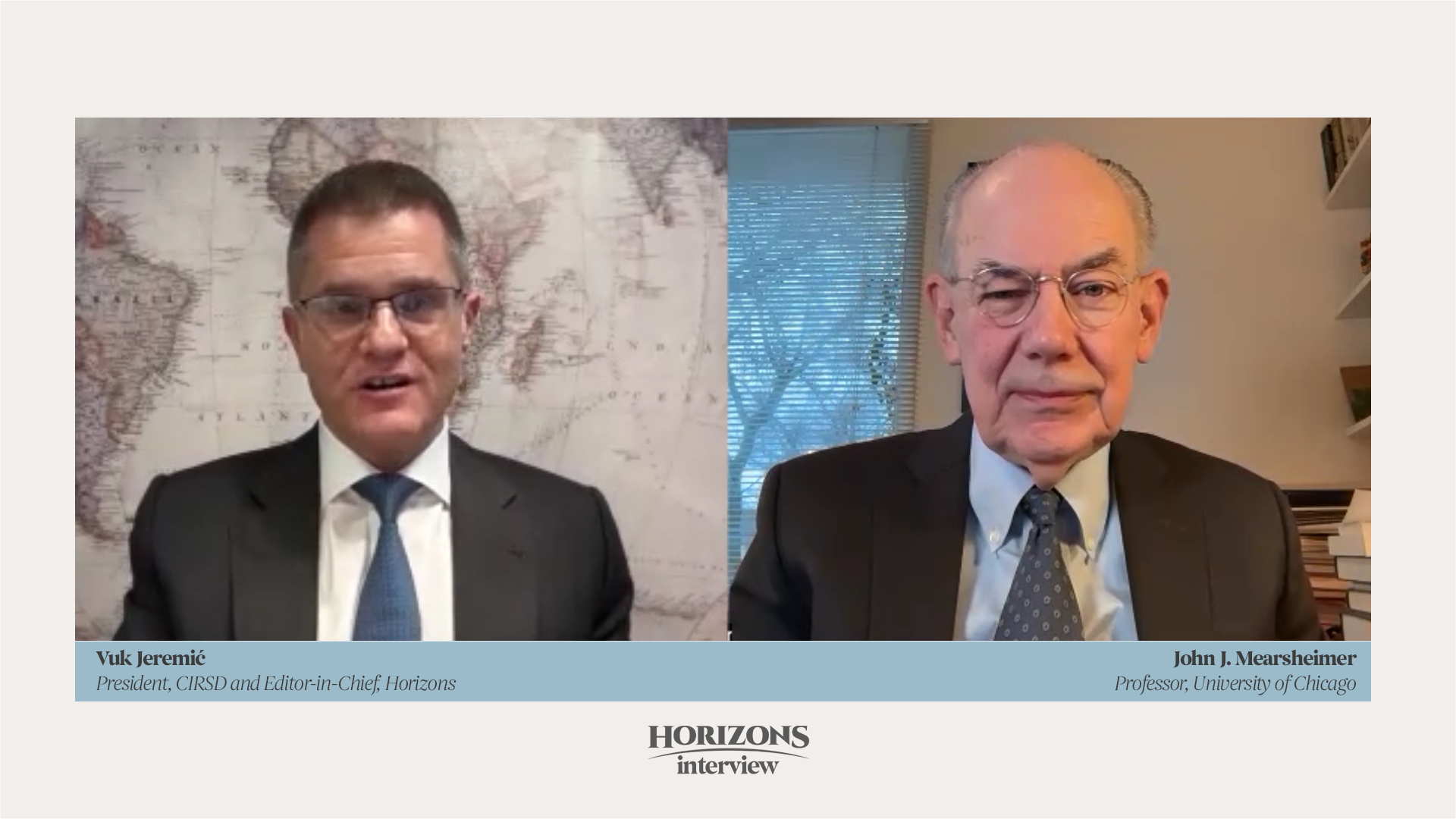
The Center for International Relations and Sustainable Development (CIRSD) has published a new Horizons Interviewwith Professor John J. Mearsheimer, one of the most influential political scientists of our time and the leading voice of structural realism in international relations. The interview was moderated by Vuk Jeremić, President of CIRSD and Editor-in-Chief of Horizons.
Read more
Economic Statecraft’s Impact on Geopolitical Realities
European Russophobia and Europe’s Rejection of Peace: A Two-Century Failure
Europe has repeatedly rejected peace with Russia at moments when a negotiated settlement was available, and those rejections have proven profoundly self-defeating.
Read more

 Author:
 Southern Africa is undergoing the worst drought in more than three decades. More than 30 million people in South Africa, Malawi, and my home country Zimbabwe are facing hunger.