At the United Nations in New York on April 22, world leaders ratified the global climate agreement reached in Paris last December. One hundred ninety-five countries, ranging from richest to poorest, have now agreed to limit global warming to well below 2°C above pre-industrial levels, with the goal of not exceeding 1.5°C. They have also committed to “intended nationally determined contributions” (INDCs) to limit or reduce greenhouse-gas emissions by 2030. This is a major achievement, but it is far from sufficient.
In fact, even if all INDC targets were achieved, the world would still be heading toward eventual warming of some 2.7-3.4°C above pre-industrial levels. To keep warming well below 2°C, emissions in 2030 must be more than 30% below those envisaged in the INDCs.
This will be an enormous challenge, given the need for major strides in economic development over the same period. Before this century is over, we should seek to enable all the world’s people – probably more than ten billion by then – to achieve the standards of living currently enjoyed only by the wealthiest 10%. That will require a huge increase in energy consumption. The average African, for example, today uses about one-tenth of the energy used by the average European. But by 2050, we must reduce energy-related emissions by 70% from 2010 levels, with further cuts needed to achieve net zero emissions by 2060.
Meeting those objectives will require both an improvement in energy productivity (the amount of income produced per unit of energy consumed) of at least 3% per year and the rapid decarbonization of energy supply, with the share of zero-carbon energy increasing by at least one percentage point each year.
This implies a massive acceleration of national efforts. Over the last decade, energy productivity has grown by only 0.7% annually, and the share of zero-carbon energy rose by only 0.1 percentage point per year. Moreover, even if the INDCs were fully implemented, these annual growth rates would reach only 1.8% and 0.4 percentage points, respectively.
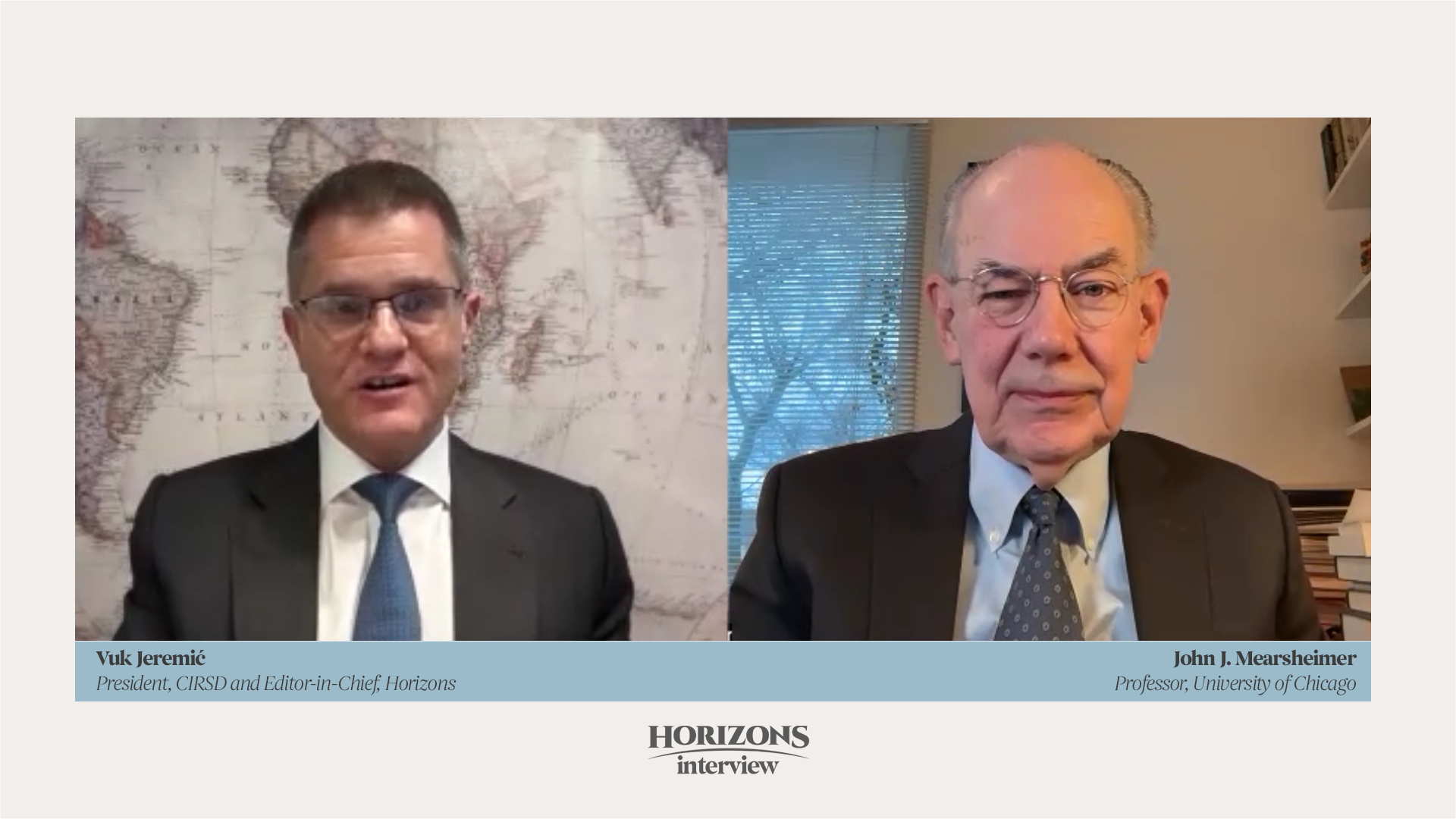
John J. Mearsheimer: The Return of Great-Power Politics
The Center for International Relations and Sustainable Development (CIRSD) has published a new Horizons Interviewwith Professor John J. Mearsheimer, one of the most influential political scientists of our time and the leading voice of structural realism in international relations. The interview was moderated by Vuk Jeremić, President of CIRSD and Editor-in-Chief of Horizons.
Read more
Economic Statecraft’s Impact on Geopolitical Realities
European Russophobia and Europe’s Rejection of Peace: A Two-Century Failure
Europe has repeatedly rejected peace with Russia at moments when a negotiated settlement was available, and those rejections have proven profoundly self-defeating.
Read more

 Ajay Mathur and Adair Turner