Why study Sustainability and Environmental Sciences
Why study Sustainability and Environmental Sciences
Author: Latin Correspondent
The Brundtland Report defines the word ‘sustainable’ as “development that meets the needs of the present without compromising the ability of future generations to meet their own needs”. Ultimately, it’s about maintaining the Earth’s natural resources to ensure the wellbeing of our children, our children’s children, and the generations beyond. They too will have needs, and what right do we have to say they can’t be met?
A lifestyle, community or environment that deems itself sustainable is one that supports itself alongside its surroundings. As Tim Murphy writes in Permaculture Design and Sequence, the philosophy of permaculture is one forged firmly on the foundations of sustainability, seeking to “comprehend and orchestrate the evolution of a climax ecosystem” in such a way that “interfaces with both existing natural systems and human culture”.
More than a decade ago, the World Summit on Social Development identified three crucial areas to strengthen the philosophy and social science of sustainable development. The core elements are: Economic Development, Social Development and Environmental Protection, and they form the backbone of most national strategies and certification programmes.
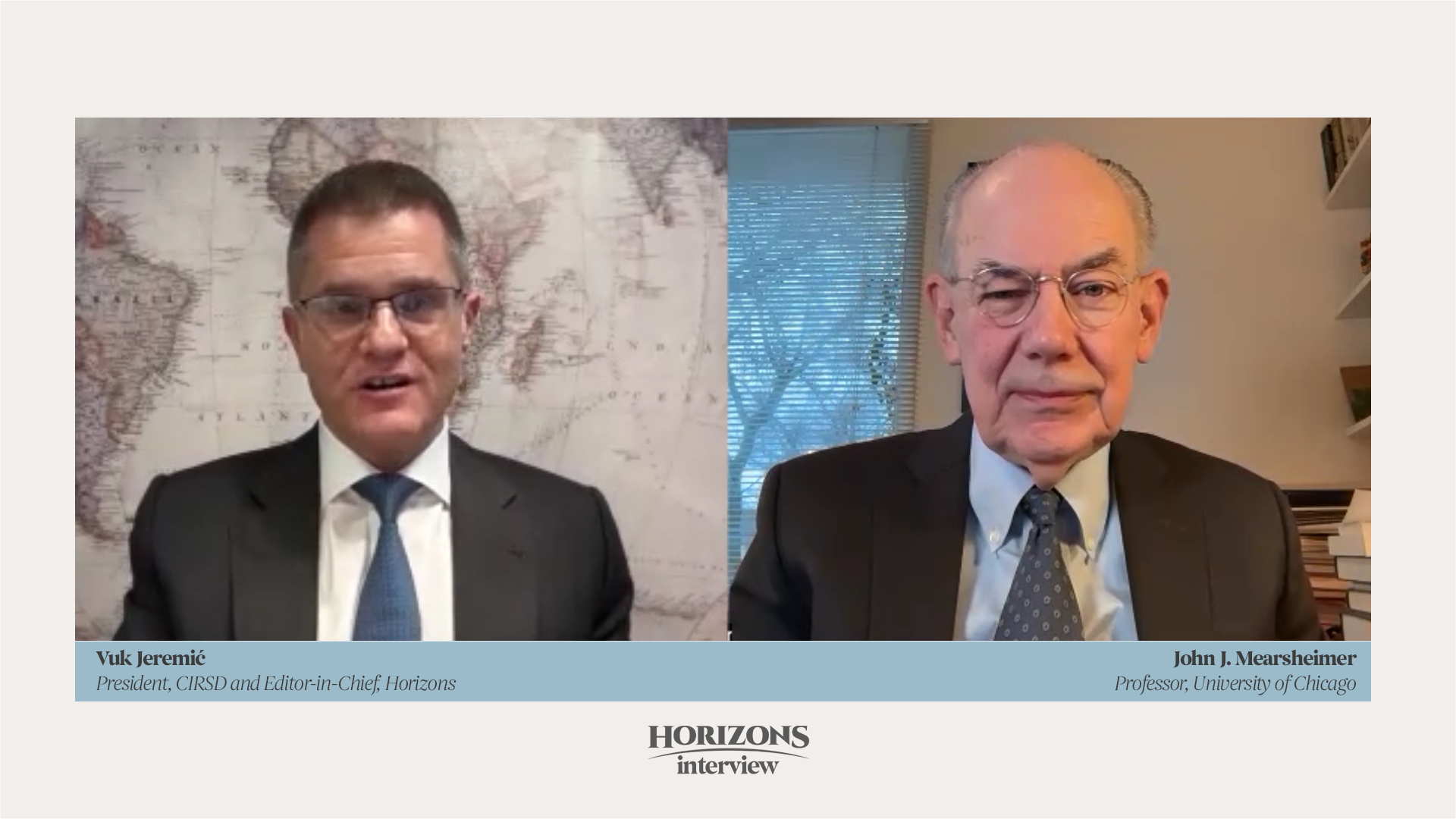
John J. Mearsheimer: The Return of Great-Power Politics
The Center for International Relations and Sustainable Development (CIRSD) has published a new Horizons Interviewwith Professor John J. Mearsheimer, one of the most influential political scientists of our time and the leading voice of structural realism in international relations. The interview was moderated by Vuk Jeremić, President of CIRSD and Editor-in-Chief of Horizons.
Read more
Economic Statecraft’s Impact on Geopolitical Realities
European Russophobia and Europe’s Rejection of Peace: A Two-Century Failure
Europe has repeatedly rejected peace with Russia at moments when a negotiated settlement was available, and those rejections have proven profoundly self-defeating.
Read more

 Author:
 The Brundtland Report defines the word ‘sustainable’ as “development that meets the needs of the present without compromising the ability of future generations to meet their own needs”. Ultimately, it’s about maintaining the Earth’s natural resources to ensure the wellbeing of our children, our children’s children, and the generations beyond. They too will have needs, and what right do we have to say they can’t be met?