Youth unemployment in the Mediterranean region and its long-term implications
Youth unemployment in the Mediterranean region and its long-term implications
Nuria Boot, Karen E. Wilson and Guntram B. Wolff
Europe’s Mediterranean neighbourhood has become a focal point of attention due to the refugee crisis. With over a million people arriving in Europe in the course of 2015, the question of how to address the growing immigration pressures has become a central political issue.
Countries around the Mediterranean are also under scrutiny due to mounting security concerns in Syria, Libya and elsewhere. A range of economic literature links conflicts to demographic conditions and poor economic opportunities for young people. Countries undergoing “demographic transition”, resulting in very youthful populations, are especially vulnerable to conflict, in particular when economic opportunities are scarce (Homer-Dixon 1999; Kelley & Schmidt 2001; Urdal 2004; Kahl 2006).
Youth unemployment is an urgent issue in many countries across the Mediterranean region, where 25.4 million people are unemployed, of whom 7-8 million are aged 15-24. (World Bank 2014; United Nations World Population Prospects 2015). 490 million people live in the region, of which 192 million are part of the 8 EU member states.
The proportion of young people not in education, employment or training has increased since the financial crisis, and in many countries youth unemployment rates are higher than unemployment in the older working age population. The figures available may even underrepresent the true level of unemployment due to non-participation in the labour market.
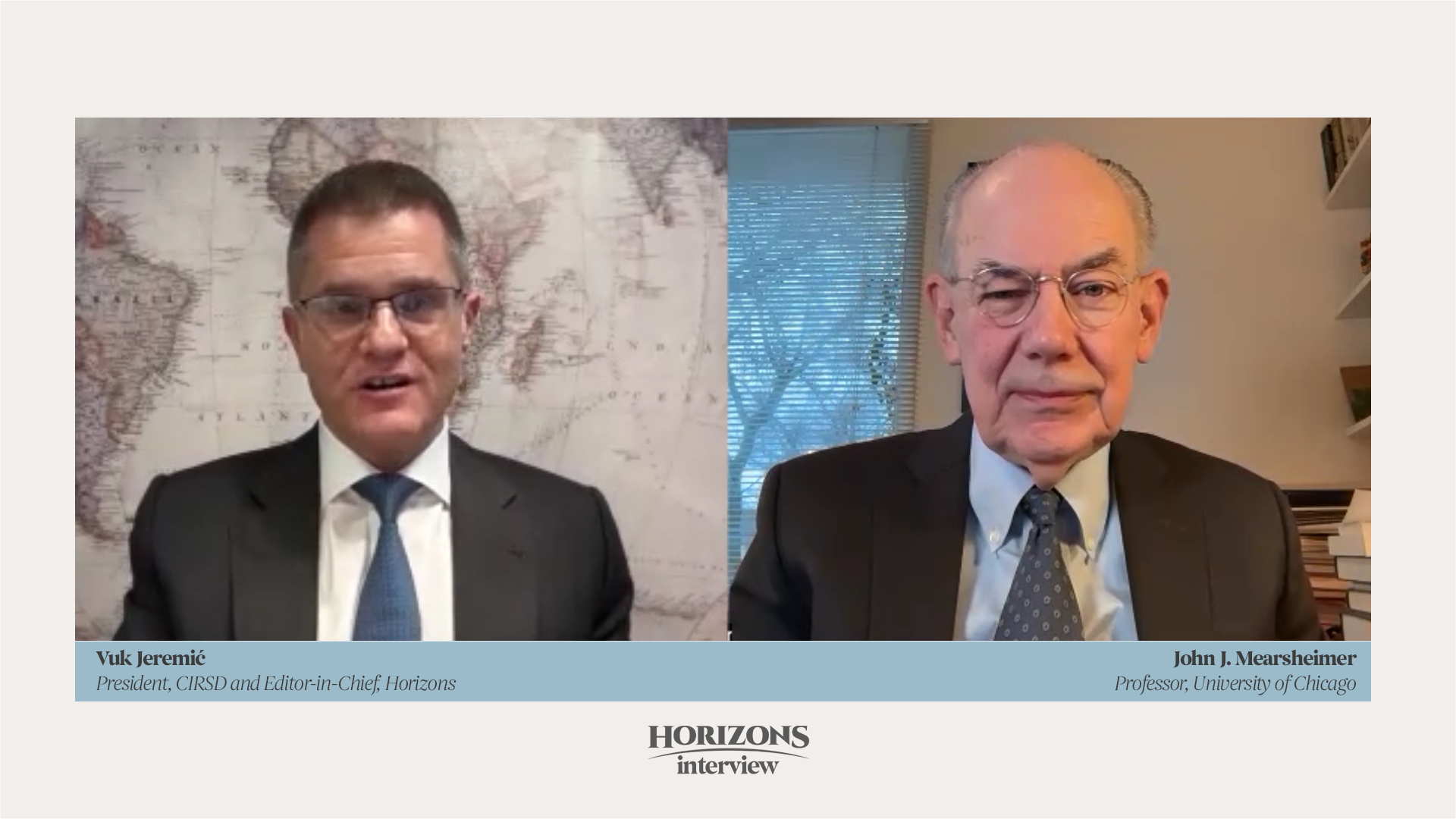
John J. Mearsheimer: The Return of Great-Power Politics
The Center for International Relations and Sustainable Development (CIRSD) has published a new Horizons Interviewwith Professor John J. Mearsheimer, one of the most influential political scientists of our time and the leading voice of structural realism in international relations. The interview was moderated by Vuk Jeremić, President of CIRSD and Editor-in-Chief of Horizons.
Read more
Economic Statecraft’s Impact on Geopolitical Realities
European Russophobia and Europe’s Rejection of Peace: A Two-Century Failure
Europe has repeatedly rejected peace with Russia at moments when a negotiated settlement was available, and those rejections have proven profoundly self-defeating.
Read more

 Nuria Boot, Karen E. Wilson and Guntram B. Wolff