ISIL is using the language barriers within its ranks to evolve jihad beyond Arabic
ISIL is using the language barriers within its ranks to evolve jihad beyond Arabic
Author: Michael Erard
As everyone knows by now, ISIL has attracted new and seasoned jihadis from all over the world. But many of its 30,000 recruits (a typical estimate) don’t speak Arabic. So without a common language, how do they fight?
This question has become particularly interesting in light of a fairly recent change to ISIL’s fighting structure. The change was revealed, in passing, in “Confessions of an ISIS Spy,” a series of Daily Beast articles last November by Michael Weiss, based on his interviews with a supposed ex-ISIL intelligence officer named Abu Khaled.
Abu Khaled told Weiss that many of the ISIL battle groups, calledkatibas, were originally organized by language or ethnicity. But in mid to late 2015, ISIL began reorganizing fighters into mixed katibas, either combining muhajireen (foreign fighters) with ansar (local fighters) or mixing muhajireen from different places.
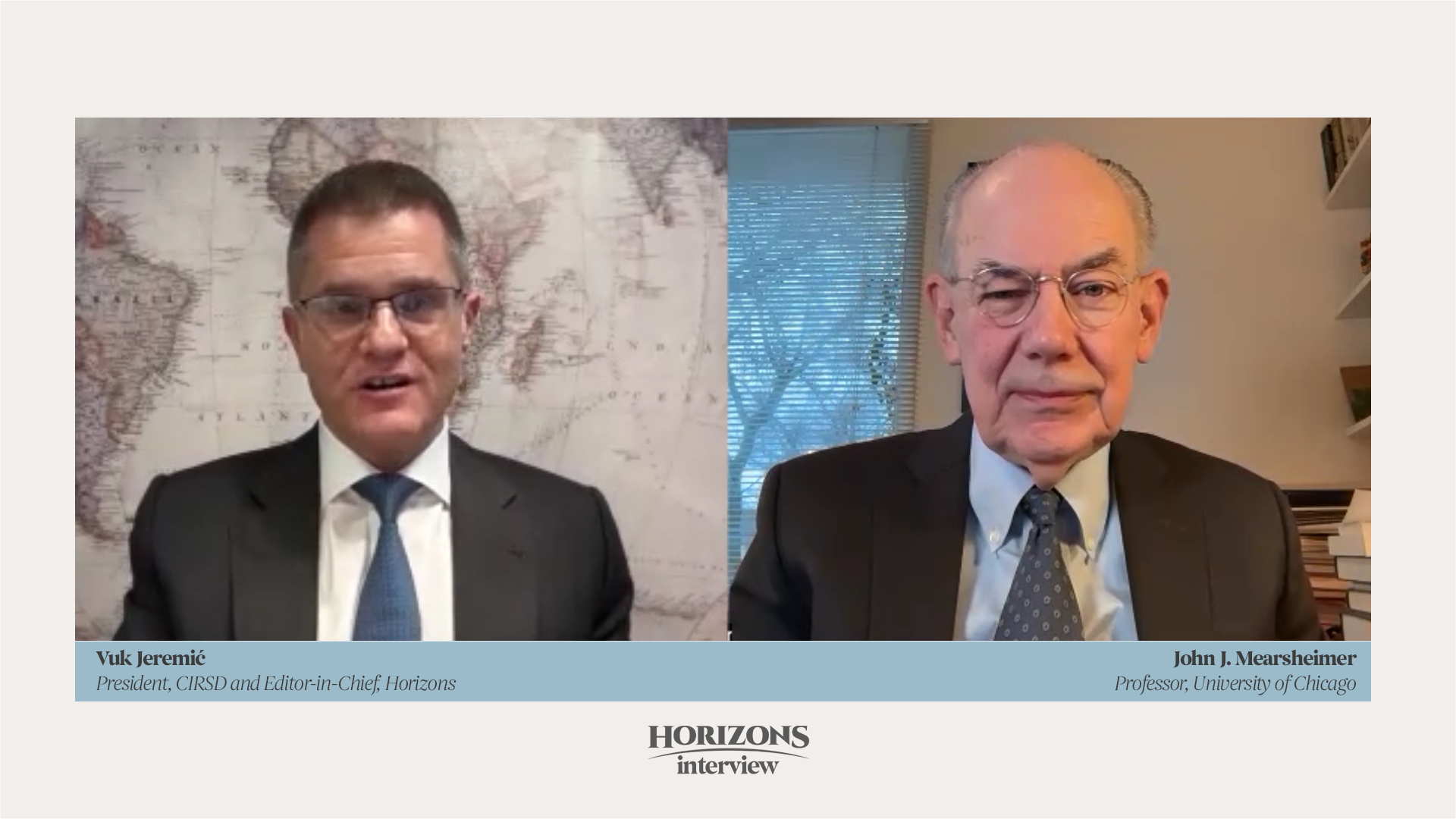
John J. Mearsheimer: The Return of Great-Power Politics
The Center for International Relations and Sustainable Development (CIRSD) has published a new Horizons Interviewwith Professor John J. Mearsheimer, one of the most influential political scientists of our time and the leading voice of structural realism in international relations. The interview was moderated by Vuk Jeremić, President of CIRSD and Editor-in-Chief of Horizons.
Read more
Economic Statecraft’s Impact on Geopolitical Realities
European Russophobia and Europe’s Rejection of Peace: A Two-Century Failure
Europe has repeatedly rejected peace with Russia at moments when a negotiated settlement was available, and those rejections have proven profoundly self-defeating.
Read more

 Author:
 As everyone knows by now, ISIL has attracted new and seasoned jihadis from all over the world. But many of its 30,000 recruits (a typical estimate) don’t speak Arabic. So without a common language, how do they fight?