- Home
- News
- Economic Statecraft’s Impact on Geopolitical Realities
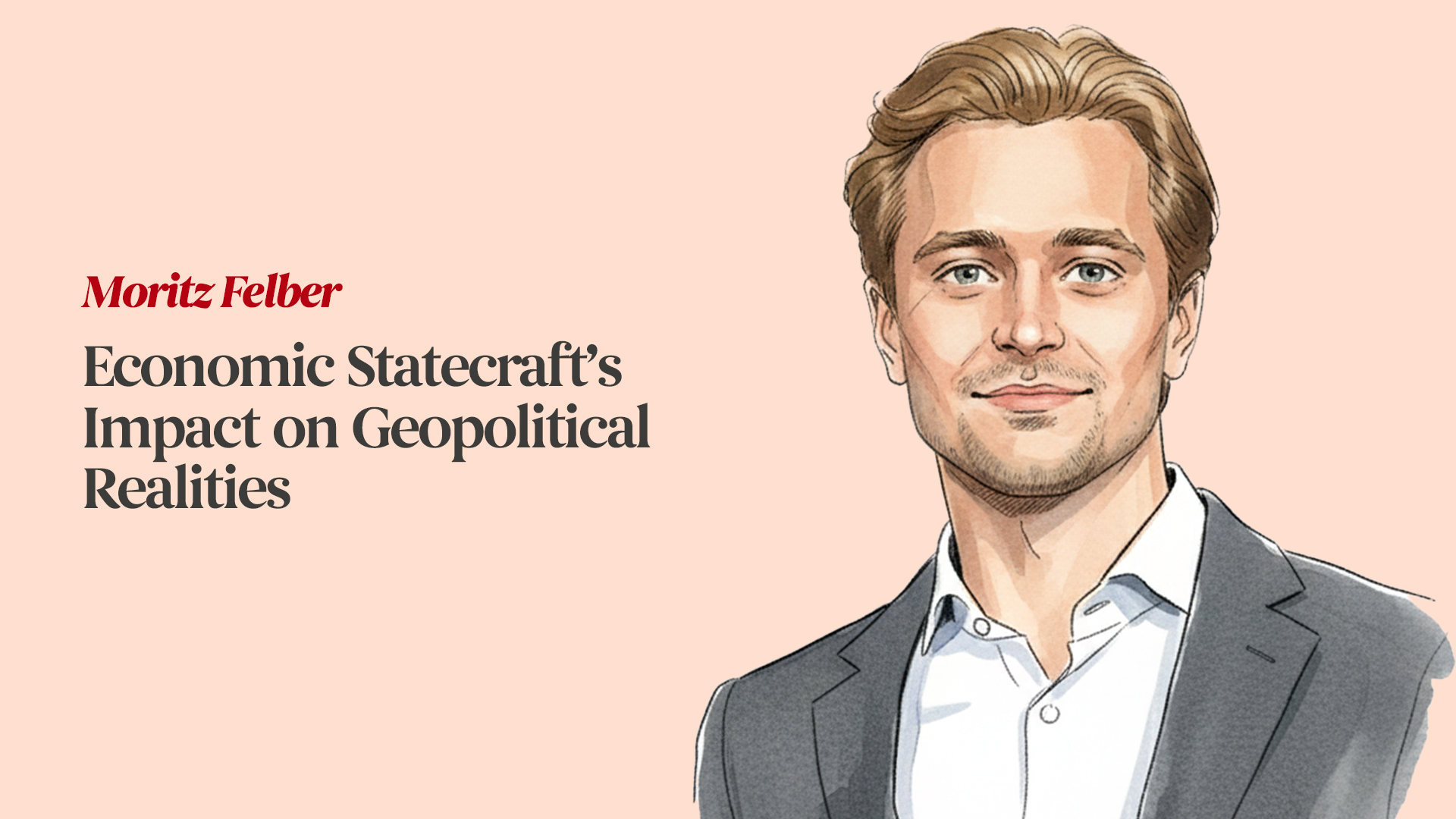
Moritz Felber is a research and editorial intern at the Center for International Relations and Sustainable Development and a master’s student at the London School of Economics.
Economic statecraft has a longstanding tradition as a tool for influencing international behavior without resorting to military force. Whether deployed unilaterally or through broader consensus, sanctions aim to penalize behavior or incentivize policy change by severing relations with designated entities. Today, these measures are central to the West’s response to geopolitical aggression, most notably following Russia’s 2014 annexation of Crimea and the 2022 invasion of Ukraine.
However, since 2022, the security landscape has deteriorated. As Russia creates distance from the West, its reorientation is shifting the global balance of power and eroding the established order. With Western influence arguably in retreat, the Transatlantic alliance faces the urgent challenge of sustaining its dominant role within international anarchy.
The West’s multilayered sanctions campaign was designed to cripple Russia’s financial networks and degrade its future military capabilities. Yet, Russia’s vast energy resources, adaptive strategies, and emerging alliances—coupled with inconsistent global enforcement—have undermined these objectives. Russia’s economy has shown surprising resilience, leading Dmitri Trenin to describe the sanctions as “the best thing the West has done for Russia.” This provocation compels a reevaluation of sanctions as a coercive tool. Consequently, this essay argues that while sanctions have inflicted economic friction, they have inadvertently accelerated a transition toward multipolarity, necessitating a fundamental rethinking of the Transatlantic Partnership.
Impact of Western Responses on Russia
Since 2014, the West has progressively intensified measures intended to degrade Russia’s financial, technological, and defensive capabilities. This has been done to deter further aggression and punish Russia for violating Ukraine’s sovereignty.
The initial sanctions regime, triggered by the annexation of Crimea, was relatively surgical, targeting specific individuals, financial entities, and the energy and defense sectors. While these measures coincided with a global collapse in oil prices—triggering GDP contraction, inflation, and currency depreciation—they failed to alter the Kremlin’s calculus. Instead, the failure of diplomatic efforts like the Minsk Agreements hardened Russia’s revolve. Moscow utilized this period to inoculate its economy against future external shocks, implementing aggressive import substitution policies, imposing counter-sanctions on European agriculture, imports, and beginning a strategic pivot toward non-Western partnerships.
Following the 2022 invasion of Ukraine, The West replaced targeted measures with an expansive economic siege. The objective was maximalist: to impose crippling costs on the Russian state and population by severing the arteries of its financial infrastructure. To date, 17 EU sanctions packages have disconnected seven major banks from SWIFT, immobilized around € 200 billion in Russian state assets, banned seaborne crude, and sanctioned over 2,400 individuals and entities. Concurrently, the United States has black-listed over 5,750 targets and frozen approximately $ 300 billion in central bank reserves.
However, the blockade remains porous. The coalition has largely avoided secondary sanctions for fear of alienating the Global South, while major economies like China and India have refused to join the regime. Crucially, the West’s energy embargo was disjointed; the postponement of European import bans allowed Russia to front-load sales, capitalizing on the very price spikes the geopolitical tension created.
The disparity between Western forecasts and Russian economic reality is evident. In 2022, analysts warned of a GDP collapse of up to 20 percent, driven by currency depreciation, export reductions, and a banking crisis. Russia’s GDP contracted by a modest 2.1 percent over the period, with the IMF and others projecting growth in the subsequent years.
This growth is primarily driven by sustained energy exports, which have remained relatively unimpeded, securing a vital lifeline of foreign currency. While inflation surged, broader macroeconomic stability was preserved: unemployment remained stable, and the ruble—defying initial predictions—appreciated. This resilience is attributable to sizable sovereign reserves, swift technocratic intervention, and the fiscal stimulus of a war economy. Furthermore, the disjointed implementation of Western sanctions proved advantageous; the postponement of Europe's energy embargo allowed Moscow to maintain elevated export volumes, capitalizing on the global price spikes.
While the immediate collapse was averted, the long-term trajectory remains a subject of fierce debate. Optimists in Moscow point to successful import substitution and new trade corridors; skeptics argue that a growth model dependent on burning reserves and building tanks is unsustainable. Ultimately, Russia's economic future now hangs on two volatile variables: global commodity prices and the durability of its new Asian alliances.
Geopolitical Implications of Russia’s Adaptive Strategies
Russia’s expansive geographic reach—encompassing about one-sixth of the world’s land mass and 20-30 percent of global resources—endows it with a distinctive capacity to withstand economic pressures. This resilience is bolstered by a population of 144 million, robust scientific expertise, and strategic alliances with China and India that have facilitated adaptation to sanctions. Furthermore, Russia’s current account surplus, economic stability, and substantial currency reserves provide a financial foundation strong enough to mitigate the impact of Western restrictions.
Nevertheless, the sanctions campaign has undeniably impacted Russia’s import capacity, the presence of international firms, and hydrocarbon sales. In the months following the 2022 invasion, Russia’s imports plummeted from $ 17 billion to $ 8 billion. Yet, by circumventing sanctions and substituting imports via China and the Eurasian Economic Zone, volumes rebounded to $ 15 billion less than a year later. While sectors relying on Western technology—such as aviation and semiconductors—faced disruption, Russia responded by increasing domestic production and strengthening non-Western partnerships. Challenges in acquiring sophisticated technology remain, and over 1,000 companies have ceased operations or withdrawn entirely. However, compared to the isolation of Iran, this withdrawal is relatively minor. In many cases, remaining Russian entities seized the opportunity to assume control of the abandoned assets cheaply, capturing market share.
Russia’s ability to weather these sanctions is largely attributed to a strategic pivot towards alternative alliances and the cultivation of a “shadow economy” through intermediaries like Georgia, Armenia, and Kyrgyzstan. Sanctions compelled Moscow to deepen trade relations with China, India, Turkey, and other non-aligned nations, often selling hydrocarbons at discounted rates to secure essential commodities and financial services. Through sophisticated third-party networks, trade with the Middle East and Asia has allowed Russia to procure restricted goods, including military technology.
Financially, Russia responded to its exclusion from SWIFT by adopting alternative payment systems, such as the China Interbank Payment System (CIPS), and expanding its domestic payment and settlement systems (SPFS) network. This shift reflects a broader trend toward "de-dollarization," reducing reliance on Western financial architecture and reinforcing Russia’s role within a multipolar economic order. By realigning its financial infrastructure and fostering self-reliance, Russia has partially insulated itself from the acute shocks of financial warfare.
These shifts have profound geopolitical implications, reshaping of alliances and global economic patterns. Western efforts to isolate Moscow have inadvertently strengthened the Russia-China strategic partnership. China has served as an economic lifeline for Russia, facilitating trade and providing financial services that blunt the intended effects of the sanctions. Consequently, attempts to drive a wedge between China and Russia are likely to fail, as China represents a reliable partner—a stability the West cannot currently credibly offer. This alignment signals the emergence of a counterbalance to Western dominance, with both powers leveraging combined resources to advance a new vision of global order.
Meanwhile, the EU’s gradual decoupling from Russian energy is transforming global energy markets, driving demand for Middle Eastern and American oil and LNG. This reorientation highlights the complex challenges of sanctioning a major energy provider. Europe’s increased reliance on alternative energy sources heightens its vulnerability to global market fluctuations, raising questions about the sustainability of a long-term sanctions regime. As inflation and energy costs rise, creating political pressure and public dissent within Europe, the domestic costs of these policies risk fracturing Western solidarity and exposing a growing dependency on the U.S.
Despite expansive sanctions, Moscow’s state-sponsored war economy has defied predictions of collapse. While the final verdict is not yet in, the path dependencies of a sustained war economy and a battle-tested army are likely to fuel future conflicts. In a multipolar world growing uncertainties about the Transatlantic partnership and wider geopolitical realignments demand a reevaluation of alliance structures and the formulation of coherent strategies that align ends with means.
Assessment of Economic Statecraft
Historically, sanctions have frequently inflicted greater hardship on local populations than on the targeted ruling elites—a pattern evident in Yemen and Iran. In Russia’s case, the sanctions campaign has arguably reinforced domestic support for the government. By framing Western actions as economic imperialism, the Kremlin has mobilized domestic resilience rather than fostering dissent. Thus far, sanctions have failed to compel Russia to alter its policies or withdraw from Ukraine, raising questions about the utility of such measures against resource-rich and politically insulated states.
A critical limitation of the current sanctions regime is the absence of extraterritorial enforcement. Primary sanctions, which restrict Russia’s direct access to Western markets, leave significant loopholes that Moscow exploits to access alternative markets. Consequently, the efficacy of these sanctions is constrained without secondary sanctions, which would penalize non-aligned countries maintaining economic ties with Russia. Implementing secondary sanctions could mitigate these shortcomings by punishing entities that facilitate evasion, thereby imposing the isolation that primary sanctions alone cannot achieve.
Ultimately, the effectiveness of sanctions as a long-term strategy is eroded by a poor historical track record. Despite considerable economic pressure, Russia has remained unwavering in its foreign policy objectives, underscoring the limits of economic coercion as a tool for geopolitical influence. When imposed on a large, resource-rich, and technically proficient economy like Russia, sanctions unintentionally emulate the consequences of stringent trade protectionism, industrial policy, and capital controls. External pressure has forced Moscow to foster self-sufficiency and economic insulation—creating conditions the government likely could not have imposed independently. Rather than crippling the economy, sanctions have effectively bolstered Russia’s internal industrial development, reinforcing its ability to operate independently of Western influence.
Strategic Outlook
Despite the initial resilience driven by state-led military spending, the war is exacting a heavy toll on Russia. With casualties—dead and wounded—estimated to approach the one million-mark, combined with mass emigration and mobilization, Russia faces an acute labor shortage that undermines productivity and future economic potential. Significant hardship persists due to inflation, aggravated by rising costs and sanction-induced import restrictions. Fiscal stability is equally threatened as the vital oil and gas sector faces declining revenues from sanctions and potentially falling global prices. Moreover, massive state-backed loans for wartime spending raise concerns about a looming credit crisis—already signaled by a negative yield curve—while deepening reliance on China heightens the risks of economic dependency. While Moscow appears to be managing these challenges for now, the risks of financial instability, long-term economic stagnation, and reduced living standards are mounting.
While tools of economic statecraft have reshaped global alliances and impacted Russia’s economy, they have failed to achieve their primary objective: compelling Moscow to alter its foreign policy objectives. Russia’s adaptability, bolstered by resource wealth and new alliances, challenges the assumption that sanctions alone can effectively coerce large, resource-rich states. Instead of weakening the Kremlin, sanctions appear to have strengthened it while accelerating the decay of East-West relations. Punitive measures against oligarchs have reduced their internal political influence but simultaneously eroded Western leverage, as the Russian public increasingly views the sanctions as an act of Western imperialism. As sanctions drive a rapid, popularly accepted shift toward protectionism and self-reliance, the rationale behind Trenin’s assessment becomes clear.
Effective sanctions necessitate a coherent strategy that integrates economic pressure with diplomatic engagement and realistic objectives. A comprehensive approach must be resilient and adaptable, accounting for the costs to the sanctioning coalition and the target state’s durability. Success requires broad international adherence and enforcement through a UN Security Council mandate along with the use of secondary sanctions. This should be done in conjunction with a transparent and inclusive diplomatic process to achieve geopolitical ends.
Any sound long-term strategy must recognize that a powerful, resource-rich, and nuclear-armed nation like Russia cannot be isolated perpetually; eventually, engagement is required for geopolitical stability. History, as Mark Twain is reputed to have said, may not repeat itself but it rhymes. Attempts to break a major power’s war economy through economic pressure alone rarely succeed absent total military defeat or internal upheaval, such as popular revolt or a credit crisis. Historical lessons underscore that appeasement alone does not stop aggression, a war economy cannot be dismantled without significant hardship, and defensive moves are invariably perceived as offensive by the opposing side. Current realities foreshadow tumultuous times of instability and potential conflict.
Historic opportunities for deeper integration were missed and are unlikely to re-emerge in the foreseeable future, as Moscow has secured more reliable, value-neutral partners. While promises were broken on both sides, today’s mutual security concerns and red lines must be acknowledged and addressed diplomatically before escalation turns nuclear. National interests should be pursued with a minimum of force and a maximum of prudence, guided by a keen awareness of the historical character of nations.
While the Transatlantic Partnership is faltering, it urgently needs to unify behind a firm stance that unequivocally rejects territorial aggression. Consequently, the West should close loopholes in its sanctions regime and support Ukraine’s Article 51 right to self-defense for as long as it chooses to fight, while simultaneously engaging in genuine negotiations. Long-term regional stability requires mutual understanding of security concerns. Given the historical reality of Russia’s strategic depth, Western diplomatic efforts must employ both sticks and carrots—injected with a dose of realism—starting with taking Ukrainian NATO membership off the table.
Great power status entails great responsibility and demands strategic foresight. This responsibility includes creating face-saving avenues for all implicated powers and refraining from actions that burn bridges, as sustained engagement is quintessential for reducing tensions and preventing nuclear escalation.
Latest news