It's been called 'the most impossible job on earth’. So what does the head of the UN actually do?
It's been called 'the most impossible job on earth’. So what does the head of the UN actually do?
Author: Rosamond Hutt
UN Secretary-General Ban Ki-moon is stepping down at the end of 2016 after two five-year terms, and the race is on to find his successor.
So far there are 12 confirmed candidates – half of whom are women – vying to become the world's most high-profile diplomat. And others who have been named in the press but haven't officially thrown their hats into the ring.
For the first time in the UN’s 70-year history, the nominations are no longer happening behind closed doors. The hopefuls have been taking part in public debates as part of a wider push to make the process more transparent and inclusive.
Whoever lands the top job at the UN will be greeted on their first day by a full in-tray – brutal conflicts, violent extremism, climate change, ongoing discrimination against women and girls, some 700 million people still living in extreme poverty and a record number of displaced people around the world. There are also 17 Sustainable Development Goals to achieve by 2030.
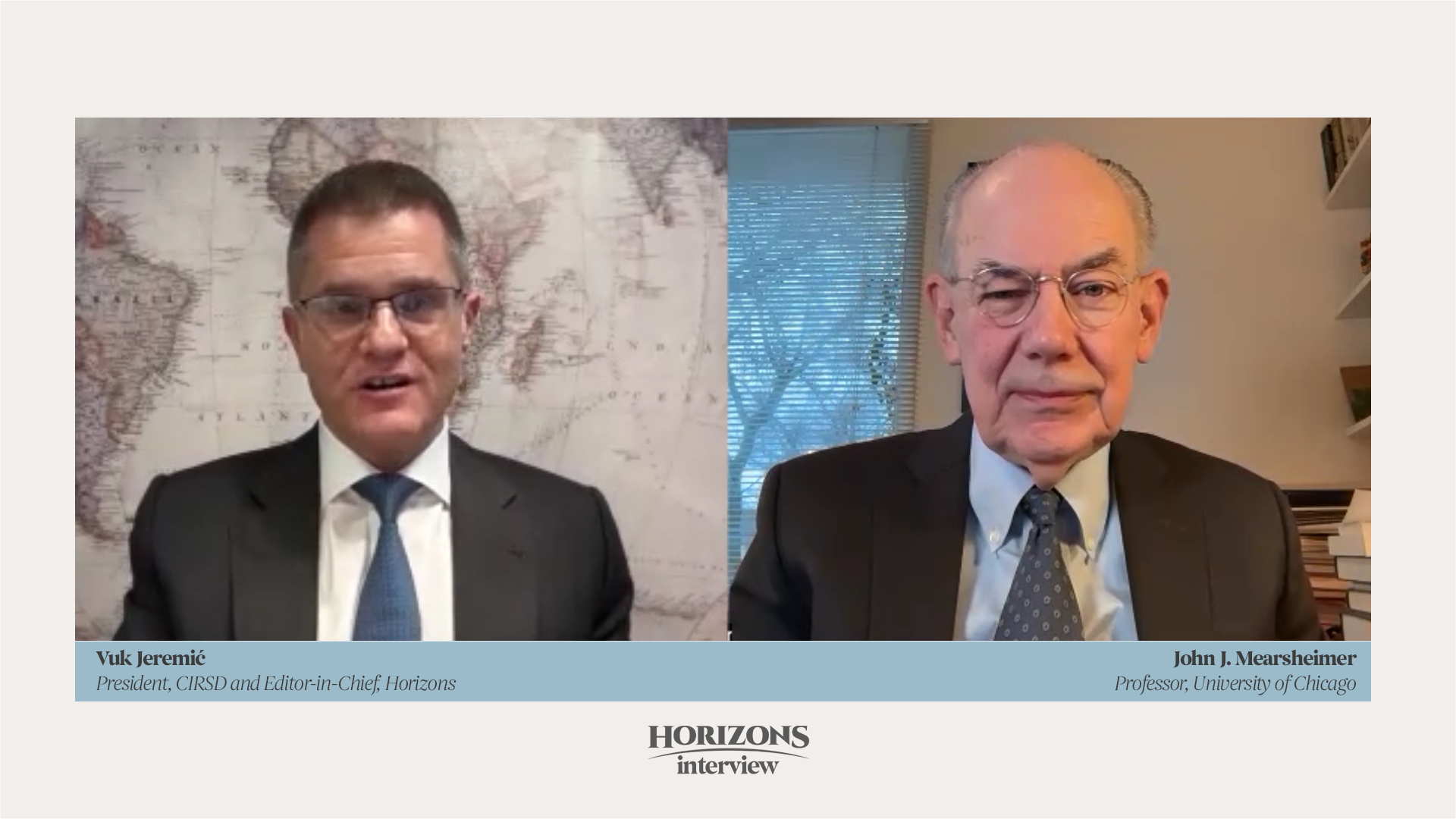
John J. Mearsheimer: The Return of Great-Power Politics
The Center for International Relations and Sustainable Development (CIRSD) has published a new Horizons Interviewwith Professor John J. Mearsheimer, one of the most influential political scientists of our time and the leading voice of structural realism in international relations. The interview was moderated by Vuk Jeremić, President of CIRSD and Editor-in-Chief of Horizons.
Read more
Economic Statecraft’s Impact on Geopolitical Realities
European Russophobia and Europe’s Rejection of Peace: A Two-Century Failure
Europe has repeatedly rejected peace with Russia at moments when a negotiated settlement was available, and those rejections have proven profoundly self-defeating.
Read more

 Author:
 UN Secretary-General Ban Ki-moon is stepping down at the end of 2016 after two five-year terms, and the race is on to find his successor.