Nusra Front split from al-Qaeda 'imminent', sources claim
Nusra Front split from al-Qaeda 'imminent', sources claim
Author: Sara Elizabeth Williams
The Nusra Front will imminently announce an official split from al-Qaeda, several sources confirmed on Monday.
Opposition activists in southern Syria have told Middle East Eye that they expect the news to be announced very soon, with Arabic media reports suggesting that the group's leader Abu Mohammad al-Jolani will now make a very rare appearance to signal his independence from the militant group.
Sources within Nusra, one of the most effective anti-government factions in Syria’s civil war, said that the new group would change its name to Jabhat Fateh al-Sham. They also stressed the group would lose access to al-Qaeda funds, although analysts have disputed the claims.
Mohamed Okda, an expert on Syrian issues who has been involved in negotiating with Syrian groups, told MEE that the money would keep flowing because the bulk of the group's funding came from private Gulf donors who would not abandon the Syrian cause as Nusra was unlikely to renounce its ideological heritage.
“Nusra is doing this to force the other rebel groups like Ahrar [al-Sham] and others into a corner, and push them into joining the new Shami front that Nusra will announce," Okda told MEE.
"They might be severing relations with al-Qaeda as an organisation," he said, adding that he knows both foreign and Arab al-Nusra Front fighters.
"[But] they are not breaking up with the ideology of al-Qaeda. [They are] firm believer[s] of al-Qaeda ideology, and a firm believer of attacking the West. They have huge respect for [former leader Osama] Bin Laden. So the separation is not ideological, it's organisational.”
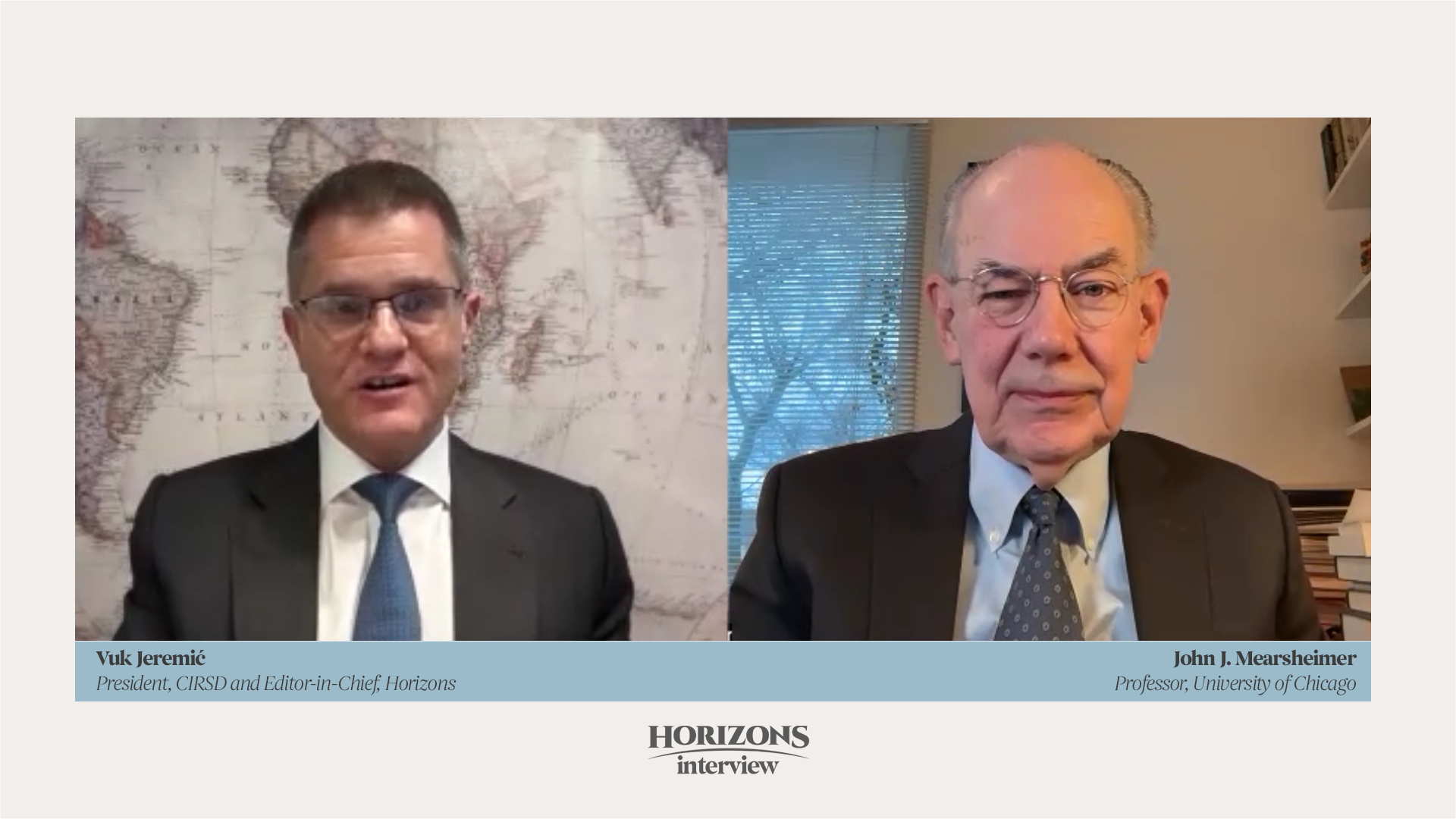
John J. Mearsheimer: The Return of Great-Power Politics
The Center for International Relations and Sustainable Development (CIRSD) has published a new Horizons Interviewwith Professor John J. Mearsheimer, one of the most influential political scientists of our time and the leading voice of structural realism in international relations. The interview was moderated by Vuk Jeremić, President of CIRSD and Editor-in-Chief of Horizons.
Read more
Economic Statecraft’s Impact on Geopolitical Realities
European Russophobia and Europe’s Rejection of Peace: A Two-Century Failure
Europe has repeatedly rejected peace with Russia at moments when a negotiated settlement was available, and those rejections have proven profoundly self-defeating.
Read more

 Author:
 The Nusra Front will imminently announce an official split from al-Qaeda, several sources confirmed on Monday.