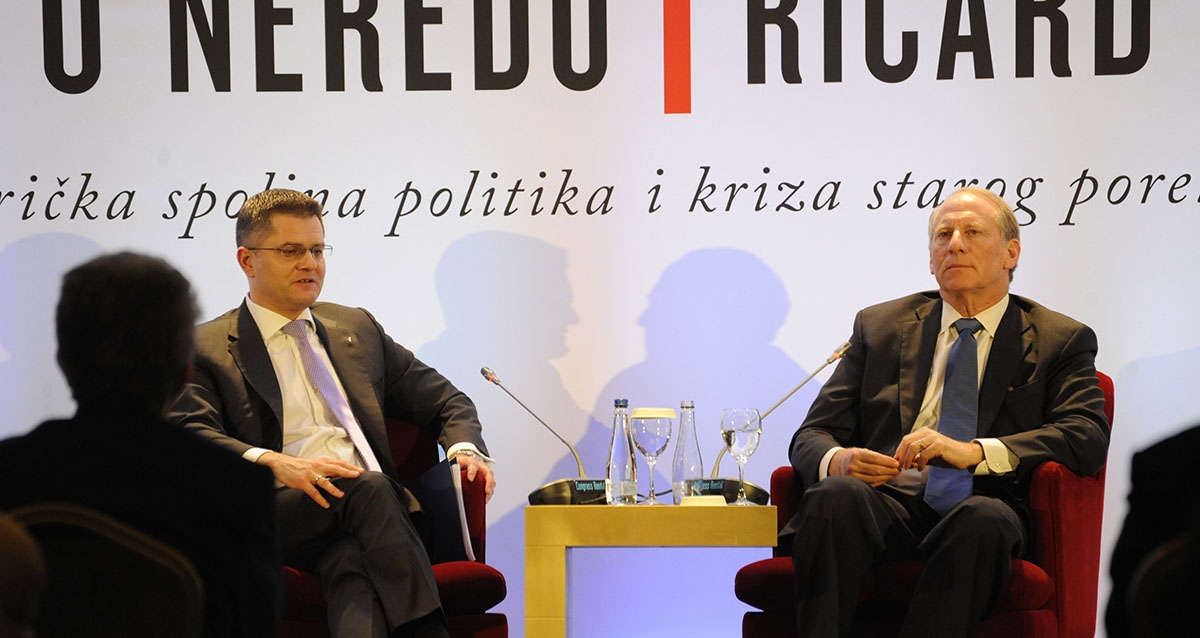
The Center for International Relations and Sustainable Development (CIRSD) launched the Serbian edition of the latest book by Richard Haass, president of the Council on Foreign Relations, the most influential foreign policy think-tank in the world, entitled “A World in Disarray”. Besides the author, the Belgrade launch featured remarks by CIRSD President Vuk Jeremić.
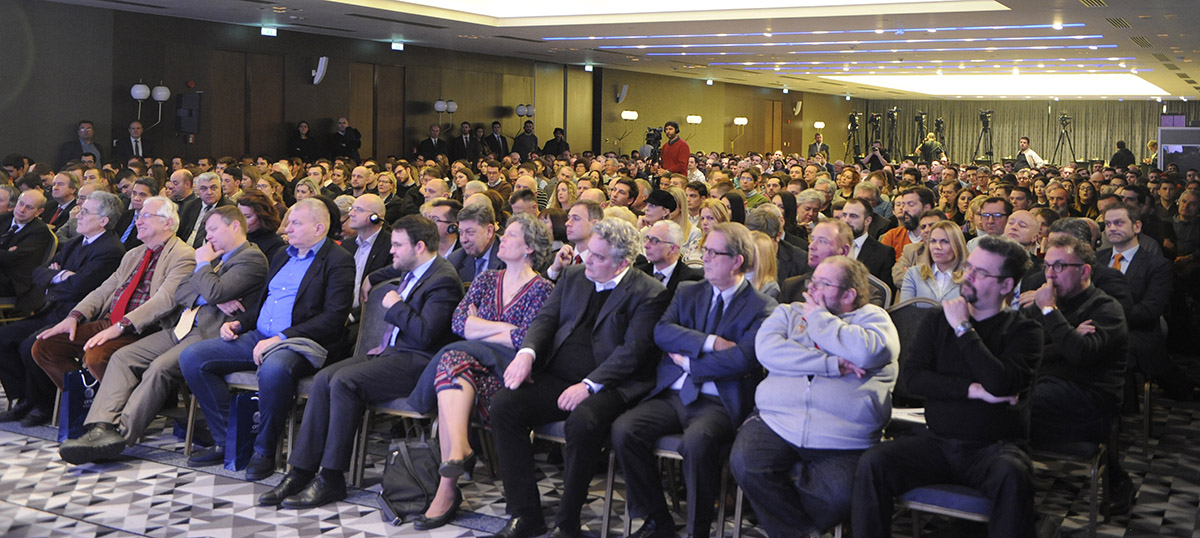
The book launch was attended by more than 500 guests, including numerous ambassadors, diplomats, editors of influential media, journalists, analysts, politicians, students and public figures.
Introducing Haass to the audience, Jeremic said he is an experienced diplomat who has served four U.S. presidents in various capacities, underlining that the most impressive part of his resume is his presidency of the Council on Foreign Relations, that has lasted over 15 years.
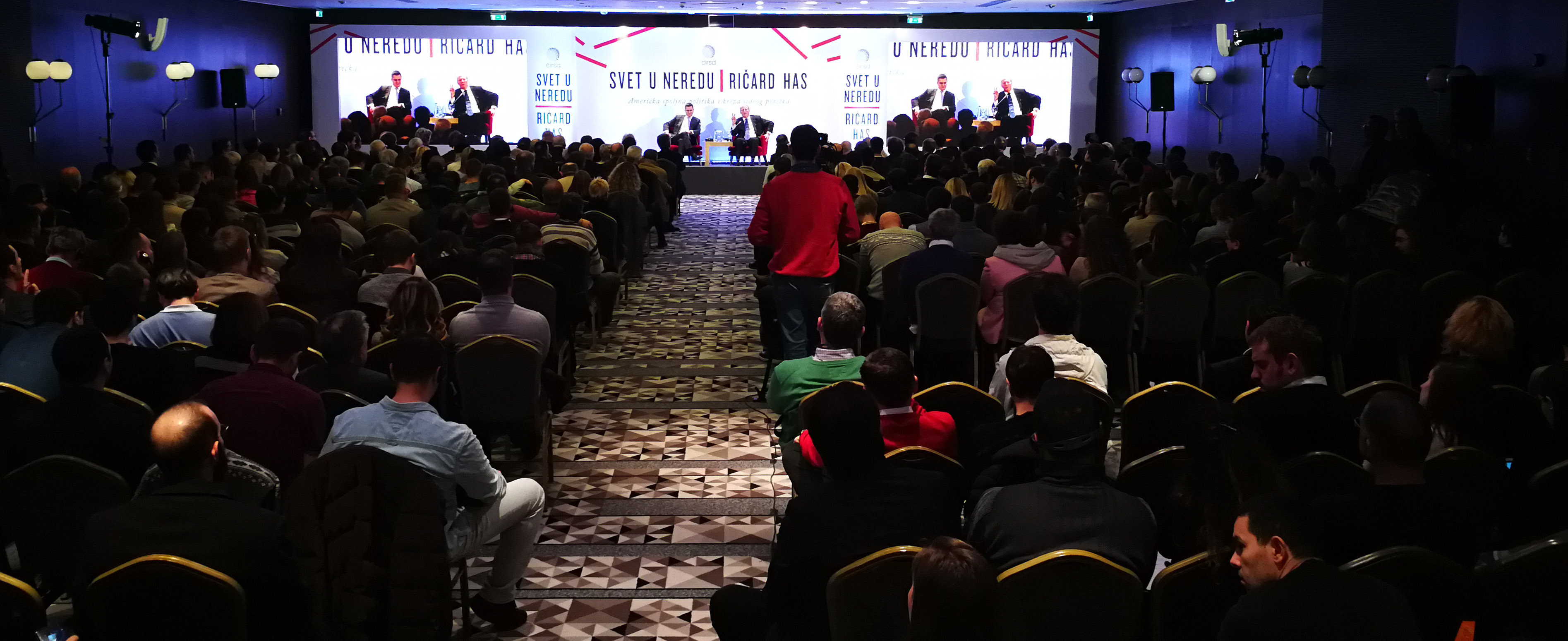
“This is the very first time that the president of the Council on Foreign Relations, founded in 1921 in New York, is visiting Serbia”, Jeremic added.
The President of CIRSD stated that the relations between the United States and China, the two largest economies in the world, were the strategic question of our time. Haass expressed his optimism regarding this issue, replying that he does not think it is inevitable that the United States and China end up in a sort of Cold War, much less a hot war. He stated that each country is quite dependant on the other one economically, underlining the developed trade, Chinese holdings of American debt investment, and Chinese integration in the regional and global economy, as well as the need for a stable environment in order to promote its internal political and economic development.
Throughout the conversation, Jeremić asked what was the number one foreign policy priority of the United Stated, to which Haass replied by stressing two priorities. First, to put America in order, since, in his opinion, many of its citizens are not benefiting from economic growth, and there are major infrastructural problems and problems in the education system and immigration policy. The second is North Korea, capable of developing nuclear weapons in the next year, year and a half, that could strike American soil.
The president of the Council on Foreign Relations stated that any honest analyst would say that Russia got a significant return on its relatively modest investment in Syria, and that along with Iran in Damascus, it kept Bashar al-Assad in power.
Expressing his opinion on the Ukraine crisis, he said that most k Russians are pleased with the Crimea annexation and there are no prospects of this changing soon. He added that Moscow could be more flexible on the question of Eastern Ukraine if an understanding could be reached regarding international peacekeeping. This could result in sanctions relief.
According to him, the top three threats to humanity are climate change, nuclear weapons and two types of diseases – pandemics caused by new viruses, and the so called “diseases of lifestyle” such as diabetes and cardiovascular diseases, as a result of smoking, alcoholism and drug abuse.
The two interlocutors agreed that the strongest world leaders in this moment are the Presidents of France, China and Russia – Emanuel Macron, Xi Jinping and Vladimir Putin.
During the discussion, Jeremić noted that Serbia is a small country in a region that is not a priority for the United States, to which Haass added that the critical ingredient in this part of the world will be the governments and citizens of the region, not the U.S.
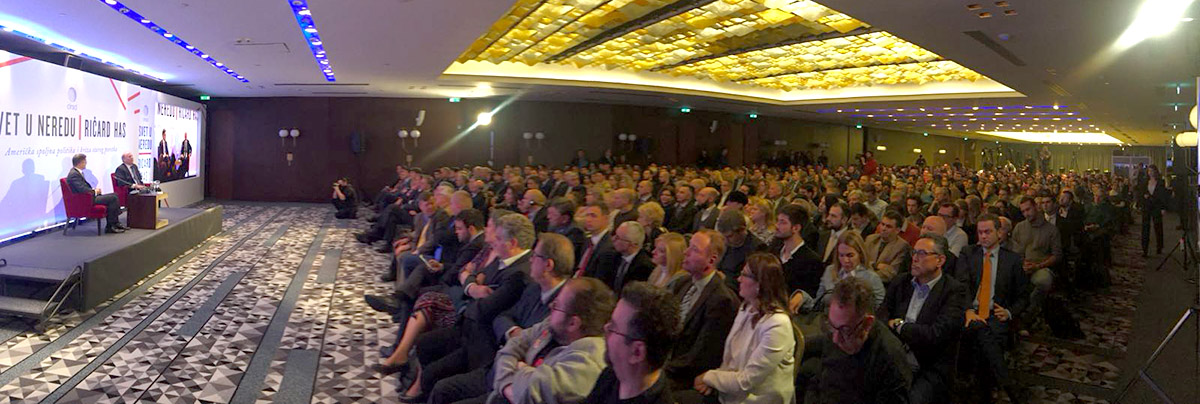
“I will use a cliché and I apologize if I insult anybody, but for you this part of the world is the chessboard. For us, it is one square on a very big chessboard, and it is simply not going to be a priority of American foreign policy”, Haass stated.
Closing up the event, the President of CIRSD concluded that it was very educational to hear the opinion on American foreign policy from the president of the world’s most influential foreign policy think tank.
“It was an unprecedented privilege and opportunity to have the president of Council on Foreign relations speak in Belgrade. I am personally not in full agreement with all I heard, but I think this was a marvelous experience. The world affairs are a complicated matter, and there will never be a full concord. ” Jeremić concluded.